Why the Pharmacist Is Asking You Questions About a Medication You Can Buy Without a Prescription

Photo: Thad Moyseowicz, Public domain, via Wikimedia Commons
You've done your research. You've identified the likely cause of your symptoms, confirmed that an over-the-counter anthelmintic is an appropriate option, and located the product on the shelf. You bring it to the register — and then the questions begin. Medical history. Current medications. Whether you've seen a doctor recently. For a product that requires no prescription, the experience can feel surprisingly clinical.
This scenario is more common than most consumers realize, and it raises a legitimate question: why do some pharmacies treat OTC albendazole purchases like a consultation, while others simply ring up the transaction without a word?
The OTC Designation Does Not Mean Unmonitored
Over-the-counter status means that a medication has been deemed safe enough for self-selection and use without a physician's authorization. It does not mean pharmacists are prohibited from engaging with customers about their purchases. In fact, the opposite is true: pharmacists are licensed healthcare professionals with both the authority and, in many professional contexts, an ethical obligation to counsel patients on any medication — prescription or otherwise — when they identify a potential concern.
Albendazole occupies a somewhat unusual position in the American pharmacy landscape. It is classified as OTC, yet it remains a potent antiparasitic compound with real contraindications, including pregnancy, certain liver conditions, and interactions with several commonly prescribed medications. Pharmacists who are aware of these nuances may feel professionally compelled to ask a few targeted questions before completing the sale — particularly if the customer appears to be pregnant, is purchasing an unusually large quantity, or mentions symptoms that suggest something more complex than a routine intestinal infection.
The challenge is that this professional judgment is applied inconsistently across the country, creating a fragmented and sometimes confusing consumer experience.
Why the Experience Varies So Dramatically From Store to Store
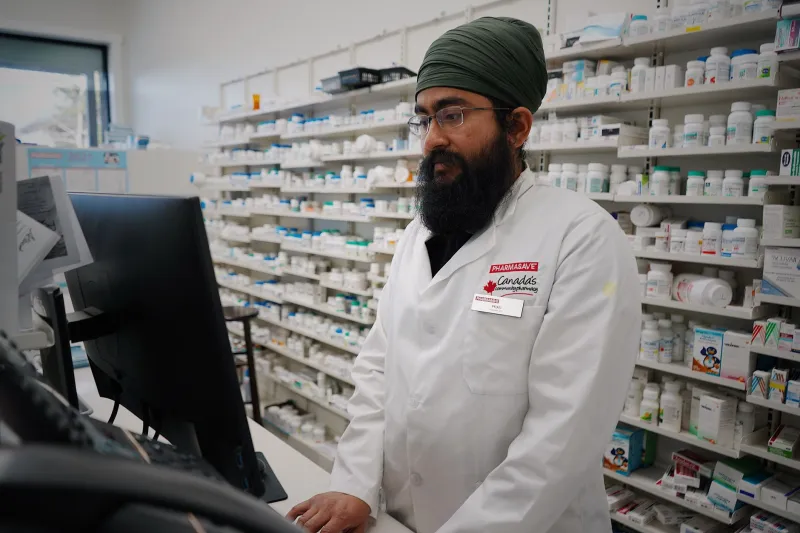
Walk into a large chain pharmacy in one zip code, and the transaction may be entirely silent. Walk into an independent pharmacy two towns over, and you may be asked whether you're currently taking anticonvulsants or whether you've recently traveled internationally. Neither response is necessarily wrong — but the inconsistency can leave consumers unsure of what to expect or what to disclose.
Several factors drive this variability. First, individual pharmacist training and professional philosophy differ considerably. Some pharmacists view OTC anthelmintics as low-risk consumer products requiring minimal intervention. Others approach them as narrow-spectrum pharmaceuticals that warrant the same care as any other drug in their inventory.
Second, pharmacy chain policies are not uniform. Large retail chains often have standardized counseling protocols, but these protocols may not specifically address OTC anthelmintics, leaving individual pharmacists to exercise discretion. Smaller independent pharmacies may have more personalized approaches — sometimes more thorough, sometimes less so — depending on the pharmacist on duty.
Third, regional differences in parasite prevalence and awareness affect how seriously pharmacy staff take anthelmintic purchases. In parts of the country where intestinal parasites are more commonly diagnosed or discussed, pharmacists may be more attuned to the relevant clinical context.
What Pharmacists Are Actually Trying to Determine
When a pharmacist asks about your medical history before completing an OTC albendazole purchase, the questions generally fall into a few categories.
Pregnancy status is the most common concern. Albendazole is classified as FDA Pregnancy Category C, meaning animal studies have shown potential fetal harm and adequate human studies are lacking. Pharmacists who are aware of this classification may ask directly or look for contextual cues before completing the sale.
Concurrent medications represent another legitimate area of inquiry. Albendazole is known to interact with certain anticonvulsants — particularly carbamazepine and phenytoin — as well as with dexamethasone and praziquantel. A pharmacist who spots a relevant medication on a customer's profile may initiate a brief conversation before proceeding.
Symptom severity and duration sometimes prompt follow-up. If a customer mentions symptoms that sound more consistent with a systemic or tissue-invasive parasitic infection — rather than a straightforward intestinal one — a pharmacist may encourage evaluation by a physician before self-treating with an OTC product.
None of these questions are designed to gatekeep access to a product you're legally entitled to purchase. They reflect a pharmacist doing their job.
Your Rights as a Consumer
Understanding your rights can make the pharmacy counter feel less like an interrogation and more like an exchange between informed parties.
You are not required to answer a pharmacist's questions in order to purchase an OTC medication. A pharmacist may decline to sell you a product if they have a genuine clinical concern — this is within their professional authority — but they cannot compel you to disclose personal health information as a condition of purchasing a non-restricted over-the-counter product in most circumstances.
Your pharmacy purchase history is protected under HIPAA when your records are held by a covered entity, such as a pharmacy that processes insurance claims. However, if you pay cash, your transaction generates less protected data, and your privacy exposure is correspondingly lower.
If you feel that a pharmacist's questions are excessive or that your purchase is being unnecessarily obstructed, you may politely decline to answer, ask to speak with a pharmacy manager, or choose to complete your purchase at a different location. You are also free to purchase OTC anthelmintics through legitimate online pharmacies, where the point-of-sale interaction is different in nature, though reputable platforms may still present health screening prompts during checkout.
How to Navigate the Conversation Productively
Rather than viewing pharmacy screening questions as an obstacle, consider approaching them as an opportunity. A pharmacist who is engaged enough to ask about your health history is also positioned to offer genuinely useful guidance — on dosing, on treatment duration, on what to expect during and after a course of albendazole, and on whether your specific situation might benefit from professional evaluation.
If you are comfortable doing so, brief and relevant disclosure can actually work in your favor. Mentioning that you've recently returned from international travel, that you've identified the likely parasite through a stool test, or that you've consulted a physician who recommended OTC treatment can streamline the interaction and signal to the pharmacist that you are an informed consumer who has already done the appropriate due diligence.
Being prepared with basic information — the approximate weight of the person being treated, any current medications, and a general sense of the presenting symptoms — can move the conversation forward efficiently without requiring you to share more than you're comfortable disclosing.
The Broader Picture
The inconsistency consumers encounter when purchasing OTC albendazole is not unique to anthelmintics — it reflects a broader tension in American retail pharmacy between accessibility and clinical oversight. Over-the-counter medications exist on a spectrum, and pharmacists navigate that spectrum differently based on training, policy, and professional judgment.
What consumers deserve, regardless of where they shop, is a consistent, respectful, and informative experience. Until pharmacy systems catch up to that standard, knowing why the questions are being asked — and what you are and are not obligated to share — is the most practical form of preparation available.